ΑΙ & Entrepreneurship Opportunities for EFL Teachers

Artificial intelligence (AI) is in all our lives to stay. AI is also rapidly reshaping language education, and for English as a Foreign Language (EFL) teachers this shift is not only pedagogical but also professional. The same technologies that are transforming how students learn English are also changing how we teachers work, how we structure our careers, and how we generate income.
Over the past decade, digital language learning has expanded dramatically, allowing global platforms to reach tens of millions of learners. The language-learning platform Duolingo, for example, reported about 130 million monthly active users in 2025, with more than 10.9 million paying subscribers and over $500 million in revenue in 2023. Similar success had other tools, too, such as Talkpal AI and Praktika.
These developments show how English learning is becoming increasingly digital, global, and scalable, opening new professional paths for EFL teachers. Because artificial intelligence does not remove the need for teachers; rather, it automates routine tasks and creates opportunities to expand teaching activities beyond traditional classrooms.
This article begins a new series exploring EFL teaching and entrepreneurship in the AI era. The aim is practical: to examine how we teachers can use emerging technologies to reach more learners, grow our work, and increase our income.
How AI Can Help EFL Teachers Expand Their Work
Research on AI-integrated tools in EFL education shows that technologies such as automated writing feedback systems, conversational agents, and adaptive learning platforms can support real-time feedback, personalised learning, and improved learner engagement. We have explored this in depth in our 1st blog series, about integrating AI and technological tools into our work.
And as we've found, these tools do not replace teachers. Instead, they can reduce time spent on repetitive tasks and allow us to focus on higher-value activities such as emotional support, coaching, and strategy. This new free time of ours along with a number of new technological capacities are creating three major opportunities we want to explore here:
1. Scaling Existing Teaching Work
Many of us spend significant time on tasks such as correcting writing, preparing exercises, and generating feedback. AI-assisted tools can support these activities and reduce the time required. Research on automated writing evaluation systems shows that an auto-correction tool can in fact provide the appropriate and equally effective feedback to a human! This creates a practical benefit for teachers. Let me give you an example:
- If a teacher spends 10 minutes correcting an essay (which is a very conservative estimation!)
- and has 40 students submitting writing every week
that represents nearly 7 hours of correction work per week.
If AI reduces this time by even 50%, several hours per week become available. Those hours could be used to:
- teach additional classes
- offer extra tutoring sessions
- design new learning materials or courses
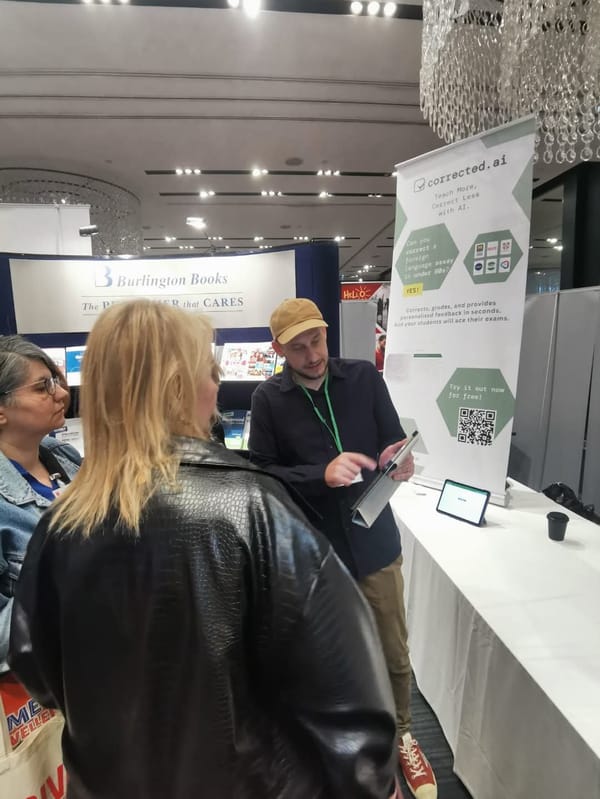
Tools that support automated writing feedback, such corrected.ai, are increasingly being integrated into EFL teaching workflows to help manage larger numbers of students while maintaining feedback quality and boosting learning results.
2. Side Income Through Online Teaching Platforms
Another opportunity is the expansion through global tutoring platforms. These platforms connect teachers and students internationally and allow educators to offer lessons independently.
With AI tools assisting lesson preparation, homework correction, and material creation, teachers can make additional tutoring hours more manageable. Typical uses of AI in this model include:
- generating lesson plans or discussion prompts
- creating vocabulary and grammar exercises
- preparing short reading or writing activities
- summarising student errors after a lesson
AI reduces preparation time allowing us to focus on teaching itself. For many teachers, this model functions as a side income stream, complementing work in language schools or educational institutions.
3. Creating Online Courses and Digital Products
A third opportunity involves moving teaching materials online and building structured courses that students can access asynchronously. Learning management systems (LMS) such as Moodle, Teachable, or Kajabi allow educators to package lessons, exercises, and assessments into courses that can reach students anywhere in the world.
AI tools can assist teachers in this process by helping them:
- draft course outlines
- generate practice exercises
- produce explanations and examples
- create quizzes and feedback systems
This approach has strong potential and allows teachers to sell courses to many students simultaneously, rather than teaching each lesson individually. Independent teachers who specialise in areas such as exam preparation, academic writing, or business English are particularly successful in this model, as their courses can target at specific audiences across multiple countries.
Learning Curve and Preparation
Adopting AI in teaching requires preparation. Using one tool occasionally is easy, but integrating technology into a teaching workflow requires new skills. And adding to that the need to develop an entrepreneurial mindset may sound daunting, but we're here to simplify it all and find easy steps to get there. After all, this may be the first time in decades teachers get this kind of opportunity window for change and progress! So let's see what we need to get ready for this new adventure, as several factors are important.
Digital literacy
Teachers increasingly need familiarity with different types of tools, including AI writing assistants, conversational AI platforms, and course creation systems. The good thing is that all these tools are intuitive to use, with lots of free online tutorials or courses to help the learning. Take a look at this older blog post of ours to find some of the best AI tools for your teaching.
Pedagogical judgment
Research on AI-supported language learning shows that technology can enhance learning outcomes but must be used carefully to avoid over-reliance on automated feedback. Teachers remain essential in guiding learners and interpreting errors.
Professional mindset
Teachers who treat AI as a productivity tool often discover ways to expand their work. Those who avoid experimenting with new technologies may find it harder to adapt as the industry evolves. But reading blogs and following the relevant news will help you keep up.
Possibilities, Challenges, and Practical Advice
The opportunities created by AI are significant, but they also come with challenges. Some of the main issues we must consider include:
Technology access
Not all students have equal access to digital tools.
Quality control
AI-generated materials must always be checked to ensure they are accurate and appropriate for the learning context.
Ethical considerations
Teachers must be transparent about how AI tools are used in learning and assessment -read more about this in our blog post.
Despite these challenges, the direction of language education is clear. AI tools are becoming integrated into language-learning platforms, digital classrooms, and assessment systems, and teachers who combine pedagogical expertise with technological skills will be best positioned to benefit from this shift. We may continue teaching traditional classes while also using AI to manage larger groups, offer online tutoring internationally, or develop digital courses that reach learners worldwide.
Looking Ahead
This article introduces a series exploring EFL teaching and entrepreneurship in the AI era. In the coming blog posts, we will look at practical AI workflows that help us teachers scale our work, examine examples of educators who have built independent online teaching businesses, explore tools that automate tasks such as writing correction and feedback, and discuss strategies for turning teaching expertise into digital products that can reach learners around the world.
The central idea is simple: the future of EFL teaching is not only about classrooms and textbooks. It will increasingly involve digital platforms, scalable workflows, and intelligent tools that extend our reach far beyond our local institutions.
For teachers willing to experiment and adapt, artificial intelligence is not just another educational technology. It is a set of tools that can expand what a single teacher can do, how many students they can reach, and how they can build a sustainable and rewarding career in language education. And we're looking forward to exploring this together!